
Hardwood flooring can handle years of everyday life, but scratches, dull areas, stains, and general wear can eventually change how it looks. When that happens, homeowners may come across two potential approaches: sandless recoating and full hardwood floor refinishing.
Although both are intended to improve the appearance of a hardwood floor, they address different levels of wear. Understanding what your flooring actually needs can help you avoid doing too little for significant damage or taking on more work than necessary for minor surface wear.
What Is Sandless Recoating?
Sandless recoating generally refers to refreshing the existing finish without fully sanding the hardwood down to bare wood. Rather than removing deeper layers of the existing surface, the process focuses primarily on the floor's finish.
This type of approach may be considered when the hardwood itself remains in relatively good condition and the concerns are largely superficial. A floor that looks dull or shows minor surface wear may not necessarily have the same restoration needs as one with deep scratches, staining, or damaged boards.
However, recoating is not intended to correct every flooring problem. Damage that extends beyond the existing finish may require a more comprehensive approach.
When Does Full Hardwood Floor Refinishing Make More Sense?
Full hard floor refinishing is designed to address more substantial wear and deterioration. At Seawest Hardwood Floor Refinishing, we specialize in refinishing and restoring damaged hardwood, including floors that have become badly worn or scratched.
We also offer a full range of stains, or a custom colour mixed for your floor. This means refinishing can be considered not only when a floor needs restoration, but also when homeowners want to refresh the appearance of aging hardwood.
Consider the Type and Condition of Your Hardwood
The construction of your flooring matters when deciding how to proceed. Solid hardwood and engineered hardwood do not necessarily have the same refinishing limitations.
Engineered hardwood with a solid-wood top layer can be sanded and refinished, but not as many times as solid hardwood, because there is only so much wood in that top layer. This makes assessing the existing flooring particularly important before beginning hard floor refinishing. If you are not sure which you have, our guide to the different types of engineered hardwood explains how each is built.
The amount and type of damage should also guide the decision. A floor with primarily finish-level wear presents a very different project from hardwood with scratches, warping, stubborn stains, or other visible deterioration.
What About Dust and Finishes?
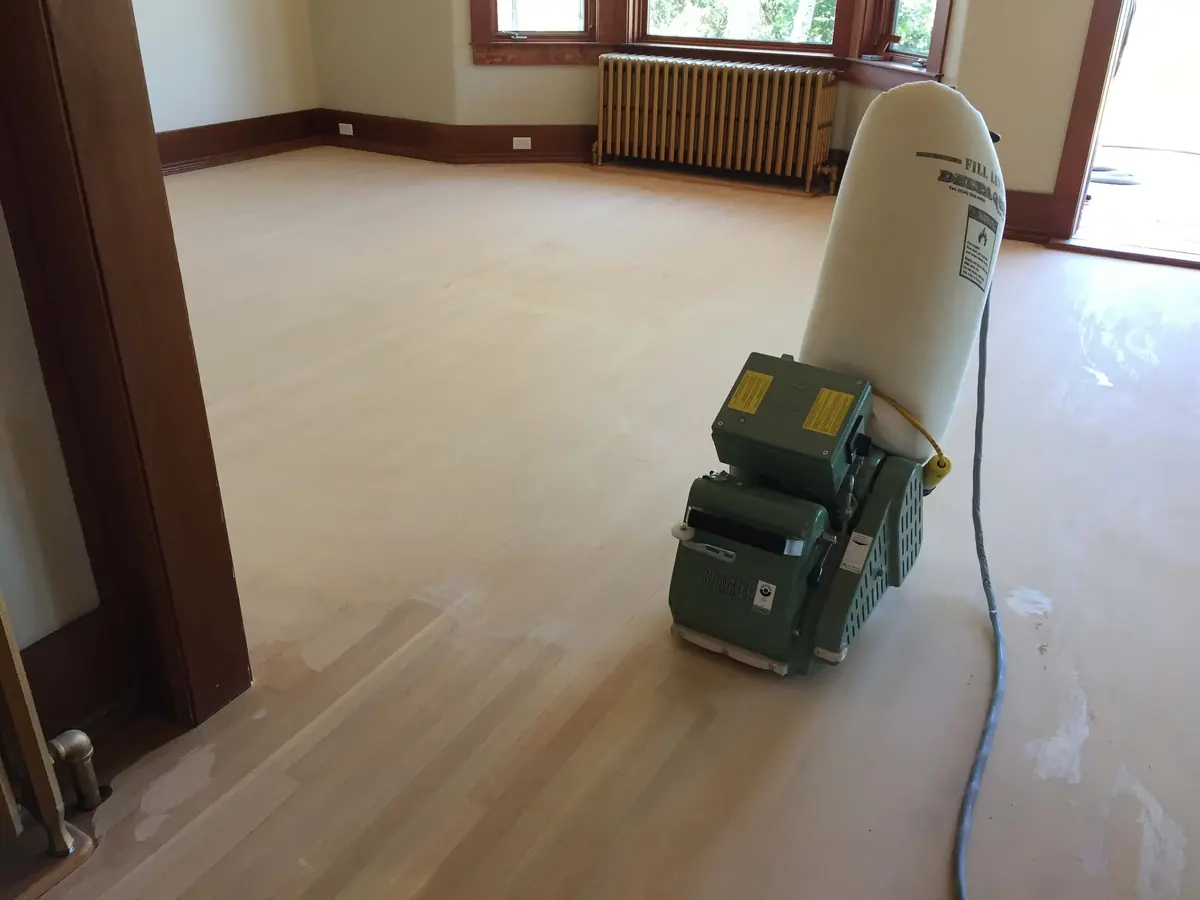
One concern homeowners may have about hardwood floor refinishing in Vancouver is the disruption associated with sanding. Every sander we run is connected to a sealed containment system that captures the dust at the machine, so the sanding is dust-free.
We also use water-based, eco-friendly finishes, and our refinishing work follows the industry-accepted standards set out by the National Wood Flooring Association.
Which Option Is Right for Your Floor?
The choice ultimately comes down to what is happening beneath the surface. Sandless recoating may be worth considering when wear is limited primarily to the existing finish. When floors are badly worn, scratched, stained, damaged, or in need of a larger visual update, full refinishing may be the more appropriate route.
At Seawest Hardwood Floor Refinishing, we provide hardwood refinishing and restoration throughout Vancouver, the Lower Mainland, and other parts of British Columbia. Our goal is to restore aging or damaged hardwood rather than automatically replace flooring that may still have plenty of life left in it.
Not sure which one your floor needs? Contact us for a free quote!